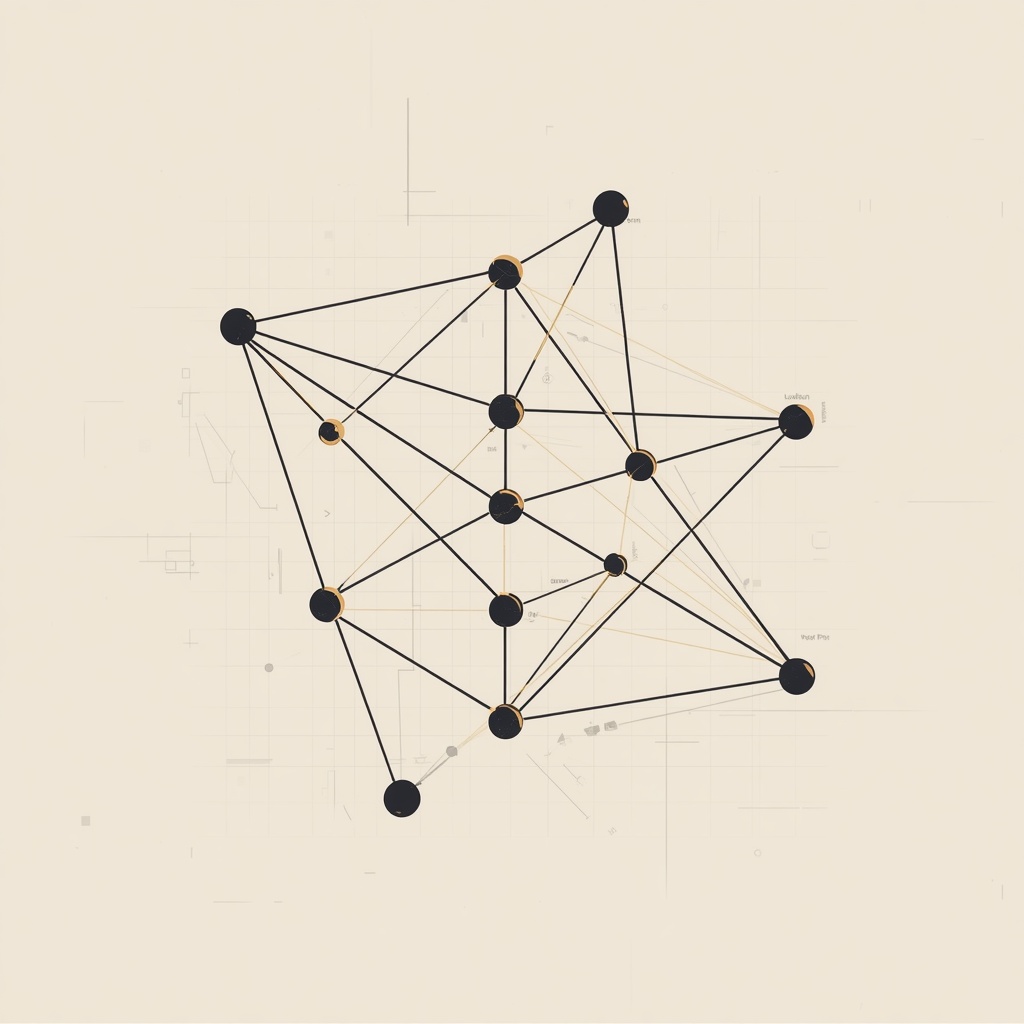
The popular demonstration for multi-agent AI involves an open room of virtual personas: a "Researcher" agent chatting with an "Engineer" agent, who in turn chats with a "Product Manager" agent.
They bounce messages back and forth in natural language until they declare the job done.
In a demo video, this conversational swarm looks clever. In production enterprise software, it is an operational nightmare.
When agents communicate through free-form natural language chat loops without explicit coordination bounds, three structural failures occur:
- Cascading Hallucinations: If Agent 1 hallucinates an unverified assumption in turn three, Agent 2 treats that hallucination as ground truth in turn four. By turn eight, the entire swarm is optimizing for a fictional scenario.
- Exponential Token Overhead: In an unconstrained $N$-agent conversational loop, every agent message is broadcast to all other agents. Token consumption scales quadratically ($O(N^2)$), driving up latency and cloud costs.
- Consensus Deadlocks: Without a deterministic coordinator, agents enter polite, circular loops—agreeing with each other, rephrasing prior conclusions, and never terminating execution.
To deploy multi-agent systems that actually run business operations, you must abandon conversational chat loops. You need deterministic coordination built on Directed Acyclic Graphs (DAGs).
Conversational Swarms vs. Deterministic DAGs
The difference between toy multi-agent experiments and production systems comes down to how work is sequenced and verified:
CONVERSATIONAL CHAT SWARM (Uncontrolled Loop)
┌─────────────┐       "Can you review this?"       ┌─────────────┐
│   Agent A   │ ─────────────────────────────────> │   Agent B   │
│ (Researcher)│ <───────────────────────────────── │  (Analyst)  │
└─────────────┘         "Looks fine, but..."       └─────────────┘
       │                                                  │
       └────────────────────────┬─────────────────────────┘
                                ▼
         Infinite feedback loops, quadratic token bloat,
         and unconstrained state mutation.

──────────────────────────────────────────────────────────────────

DETERMINISTIC DAG COORDINATION (Production Pipeline)
┌─────────────────┐       ┌─────────────────┐
│ Node 01: Ingest │ ----> │ Node 02: Verify │
│ (Schema Valid)  │       │ (SQL Query DB)  │
└─────────────────┘       └────────┬────────┘
                                   │
              ┌────────────────────┴────────────────────┐
              ▼                                         ▼
   ┌───────────────────────┐               ┌───────────────────────┐
   │ Node 03A: Price Audit │               │ Node 03B: Stock Check │
   │ (Parallel Worker)     │               │ (Parallel Worker)     │
   └──────────┬────────────┘               └───────────┬───────────┘
              │                                        │
              └────────────────────┬───────────────────┘
                                   ▼
                      ┌─────────────────────────┐
                      │ Node 04: Policy Gate    │
                      │ (Deterministic Pass/Fail│
                      └─────────────────────────┘
In a Directed Acyclic Graph, execution flows strictly in one direction along predetermined paths. There are no closed feedback loops that run indefinitely without programmatic exit criteria.
Why the DAG Model Succeeds
- Explicit Invariants: Every node in the graph requires typed input schemas and validates output schemas before passing state to downstream nodes.
- Parallelism by Design: Independent branches (such as auditing pricing and checking warehouse stock) execute simultaneously, reducing total wall-clock latency.
- Isolated Fault Boundaries: If Node 03B encounters a database timeout, only that specific node retries. The upstream work done in Node 01 and 02 remains cached and untouched.
The Core Primitives of Deterministic Multi-Agent Coordination
Building a high-reliability multi-agent architecture requires four foundational primitives:
1. Typed State Contracts
Agents must never pass raw, conversational text blocks to one another. State transitions between agents should be strictly typed JSON payloads validated by schemas (such as Pydantic or JSON Schema).
{
  "workflow_id": "wf_9824_settlement",
  "step_index": 3,
  "caller_agent": "vendor_reconciliation_agent",
  "target_agent": "ledger_mutation_agent",
  "payload": {
    "vendor_id": "V-88219",
    "sap_purchase_order": "PO-1049281",
    "calculated_discrepancy_cents": 14250,
    "authorization_hash": "e3b0c44298fc1c149afbf4c8996fb92427ae41e4649b934ca495991b7852b855"
  },
  "invariants": {
    "requires_dual_key": false,
    "max_allowed_drift_cents": 0
  }
}
If the upstream agent returns output that fails the target schema, the execution engine halts execution immediately. It does not pass garbage data to the downstream agent.
2. State Isolation vs. Shared Memory
A common architectural flaw is giving every agent unrestricted access to the entire company knowledge base or global context.
Specialized agents need isolated context. A legal compliance agent does not need to see the raw Python debugging logs of an engineering triage agent.
The coordination engine enforces context scoping:
- Private Working State: Scoped strictly to the active agent during its assigned task step.
- Shared Memory Substrate: A persistent layer (such as a hybrid graph-vector memory substrate) where verified facts, customer records, and past operational states are indexed and accessible via explicit queries.
This separation prevents prompt pollution and ensures agents only process the exact context required for their specific decision.
3. Checkpoints and State Rollbacks
In traditional databases, transactions follow ACID properties: if a transaction fails midway, changes are rolled back to maintain consistency.
Multi-agent coordination requires identical safeguards. If an agent executes three API calls (updating HubSpot, drafting an email, and preparing an invoice in Stripe) but the fourth step (debiting an account) fails validation, the coordination engine must execute compensatory rollback actions.
Without automated checkpoints and rollback routines, multi-agent systems leave enterprise databases in inconsistent, corrupted states.
4. Deterministic Convergence Gates
Every multi-agent workflow must have mathematically guaranteed termination.
This means:
- Maximum execution hop limits (e.g., no workflow can exceed 15 node transitions).
- Explicit token budgets per workflow branch.
- Deterministic fallback routes: if an agent cannot resolve a conflict within two attempts, the workflow routes to a human operator rather than attempting a third uncertain generation.
How Deterministic Orchestration Works in Practice
In practice, a swarm orchestration engine exists to solve the coordination breakdown in enterprise environments.
It provides:
- Visual DAG Orchestration: Model complex business operations as topological graphs with parallel branches, schema gates, and automated timeouts.
- Zero-Trust Step Verification: Code-level policy evaluators between every agent handoff, ensuring unauthorized actions are caught before execution.
- Automated State Checkpoints: Full snapshot recovery allowing any interrupted or failed workflow to resume from its last verified step without repeating prior work.
- Live Trace Observability: Real-time visibility into inter-agent message passing, latency bottlenecks, and decision paths across your entire agent fleet.
                  ENTERPRISE OPERATIONS
             (ERP, CRM, Databases, Custom APIs)
                            ▲
                            │ Verified Tool Execution
                            │
               SWARM ORCHESTRATOR
    ┌──────────────────────────────────────────────┐
    │  [DAG Dispatcher]      [Policy Gatekeeper]   │
    │  [State Rollback]      [Memory Context]    │
    └──────────────────────────────────────────────┘
            │               │               │
            ▼               ▼               ▼
      Agent Worker 1  Agent Worker 2  Agent Worker 3
      (Finance)       (Procurement)   (Governance)
Architectural Takeaway
Putting five LLM agents in a chatroom and hoping they solve an enterprise process is not systems engineering. It is an unconstrained loop that compounds errors.
Production multi-agent systems require deterministic coordination: Directed Acyclic Graphs, strictly typed schemas, isolated context boundaries, and automated rollback protocols.
When you engineer the coordination layer correctly, multi-agent swarms stop being unpredictable demos and become reliable, scalable operational infrastructure.
Deterministic coordination is one of the harder problems in operational AI, which is why this article sits at the center of the foundations series. Pluggedspace develops the surrounding questions of execution, memory, and governance alongside it.
- Read the Foundation Article: Learn more in our guide on Why AI Agents Need an Operating Layer.
- Explore Labs Research: Read related coordination research in Pluggedspace Labs.